Indian Classical Dance Forms
Indian classical dance is a vibrant tapestry of storytelling, spirituality, and regional heritage, deeply rooted in the ancient treatise Natya Shastra. The Ministry of Culture of India recognizes nine classical dance forms, each originating from different parts of the country and reflecting unique cultural narratives, aesthetics, and traditions. Below is a brief overview of these nine classical dance forms:
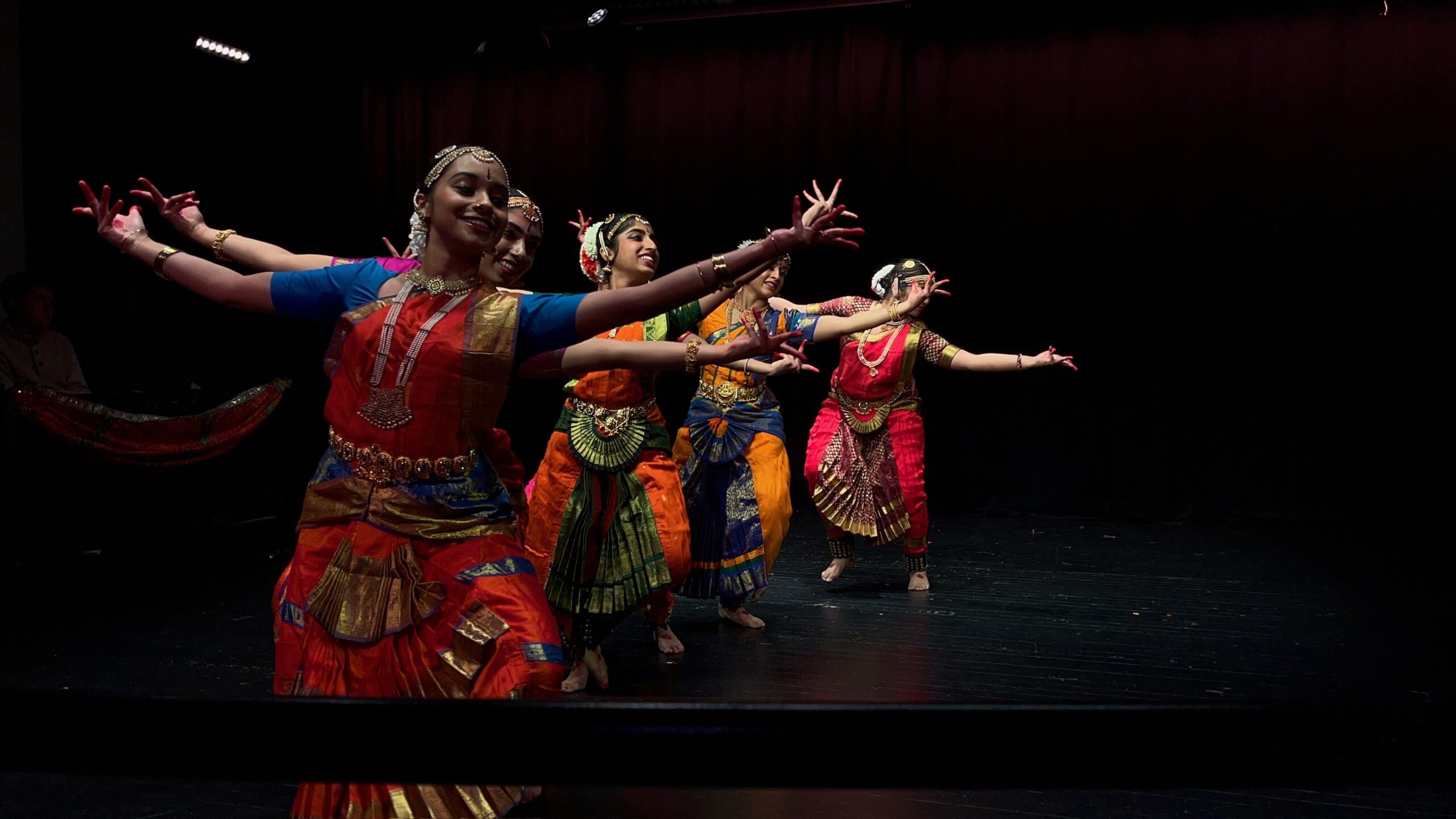
Bharatanatyam (Tamil Nadu)
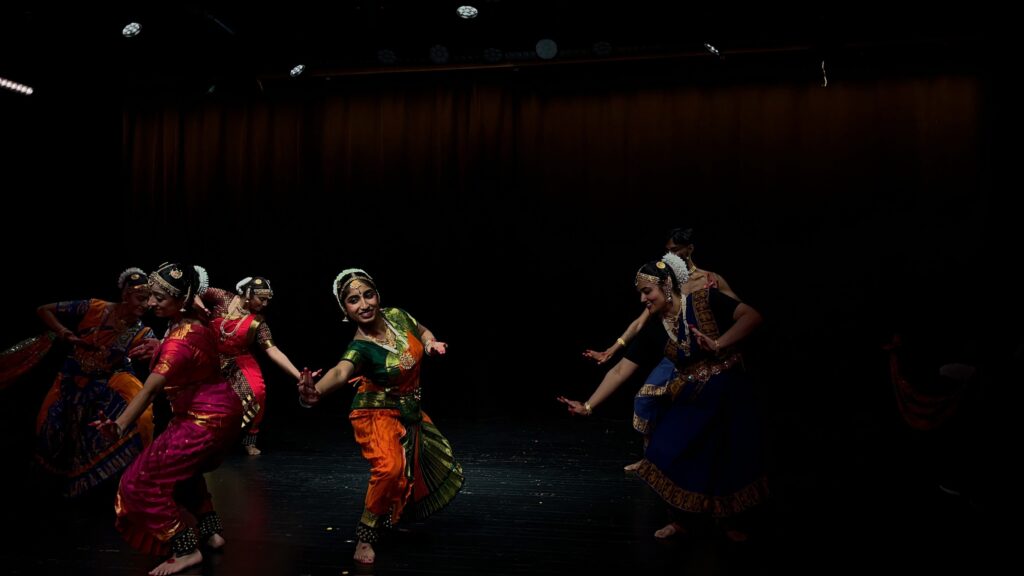
Bharatanatyam, one of India’s oldest classical dance forms, originated in the temples of Tamil Nadu. It is characterized by precise movements, sharp edges, and expressive body language. Dancers wear vibrant silk sarees with pleated fans that accentuate their movements. Traditional temple jewelry, including chokers, long necklaces, earrings, bangles, and waist belts, adorn the dancers, enhancing their expressions and storytelling.
Kathak (Uttar Pradesh)
Kathak, originating in Uttar Pradesh, is known for its intricate footwork, rapid spins, and expressive storytelling. The term “Kathak” is derived from the Sanskrit word “Katha,” meaning story. Dancers typically wear flowing lehengas or anarkalis, which accentuate their spins and movements. Jewelry such as earrings, necklaces, bangles, and anklets (ghungroos) complement the attire, adding to the visual appeal.
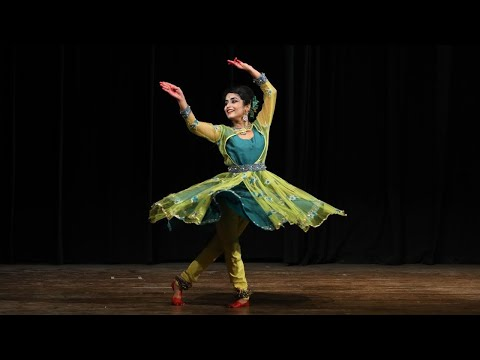
Image Credit: Tanmoyee Chakraborty
Kuchipudi (Andhra Pradesh)
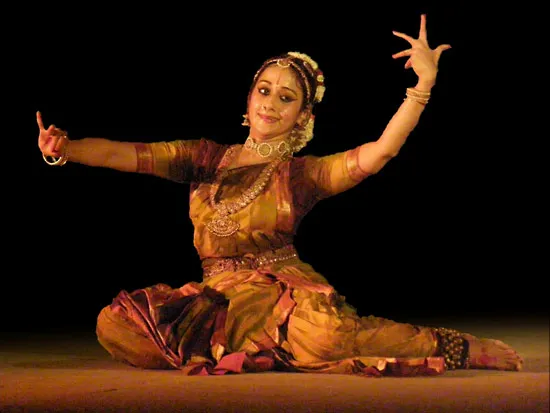
Image Credit: Brittanica
Kuchipudi hails from the village of Kuchipudi in Andhra Pradesh. It combines fast rhythms with fluid movements and incorporates both pure dance (Nritta) and expressive dance (Nritya). Dancers wear sarees with a distinctive draping style, often in vibrant colors. Jewelry includes items like the talay-saaman with surya and chandra motifs, chutti, long and short necklaces, kamar-patta (waist belt), bangles, and jhumkis (earrings).
Odissi (Odisha)
Odissi, from the state of Odisha, is known for its lyrical grace, sculpturesque poses, and fluid torso movements. It often depicts themes of devotion, particularly to Lord Jagannath. Dancers wear elaborate silver jewelry, including chokers, long necklaces, armlets, bangles, and waist belts. The jewelry is crafted using the intricate Tarakasi (silver filigree) technique, unique to Odisha.

Image Credit: Shagil Kannur
Kathakali (Kerala)
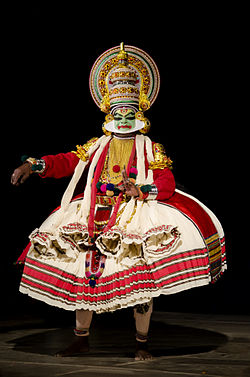
Image Credit: Wikipedia
Kathakali is a classical dance-drama from Kerala, distinguished by its elaborate costumes, vibrant makeup, and intricate facial expressions. It dramatizes stories from Indian epics like the Mahabharata and Ramayana. Male characters wear large, colorful skirts and ornate jackets, while female characters have distinct attire. Jewelry includes necklaces, bracelets, bangles, and headpieces, enhancing the grandeur of the performance.
Mohiniyattam (Kerala)
Mohiniyattam, meaning “dance of the enchantress,” is a graceful dance form from Kerala. It is characterized by gentle, flowing movements and is traditionally performed by women. Dancers wear white or off-white sarees with gold borders, reflecting purity and elegance. Gold jewelry, including earrings, necklaces, bangles, and headpieces, complements the attire, emphasizing the dance’s grace.

Image Credit: Rotary News
Manipuri (Manipur)
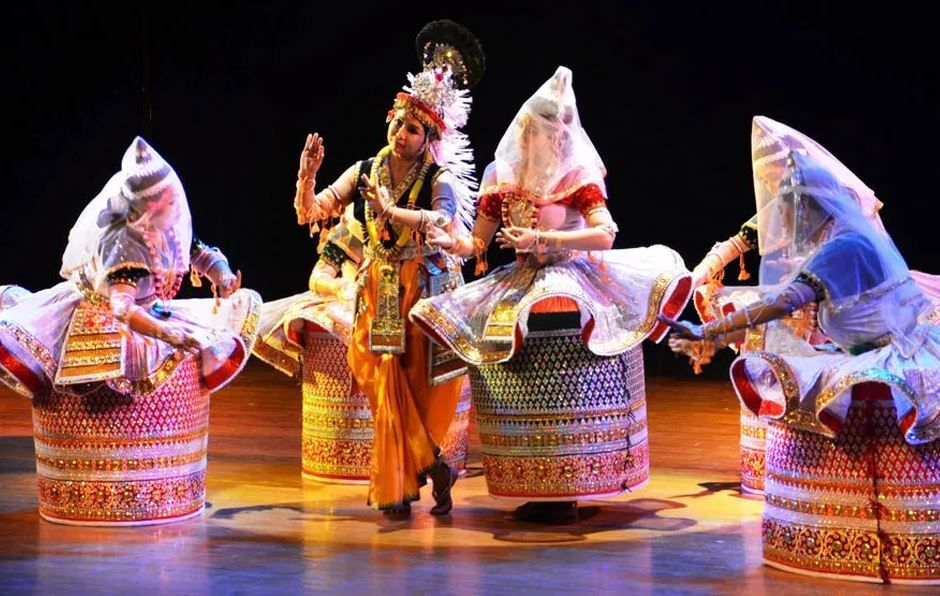
Image Credit: Imphal Review of Arts and Politics
Manipuri dance originates from the northeastern state of Manipur. It is known for its graceful, flowing movements and themes centered around the love story of Radha and Krishna. Female dancers wear the traditional Potloi costume, a cylindrical skirt adorned with mirrors and embroidery. Jewelry is inspired by nature, featuring beadwork and floral motifs, adding to the dance’s ethereal quality.
Sattriya (Assam)
Sattriya, from Assam, was introduced in the 15th century by the Vaishnavite saint Sankardev. It combines dance, drama, and music to convey devotional themes. Female dancers wear the traditional Assamese Mekhela Chador, while male dancers don dhotis and chadors. Jewelry includes items like the Kopali (forehead ornament), Muthi Kharu (bracelets), and various necklaces, all crafted in traditional Assamese designs.
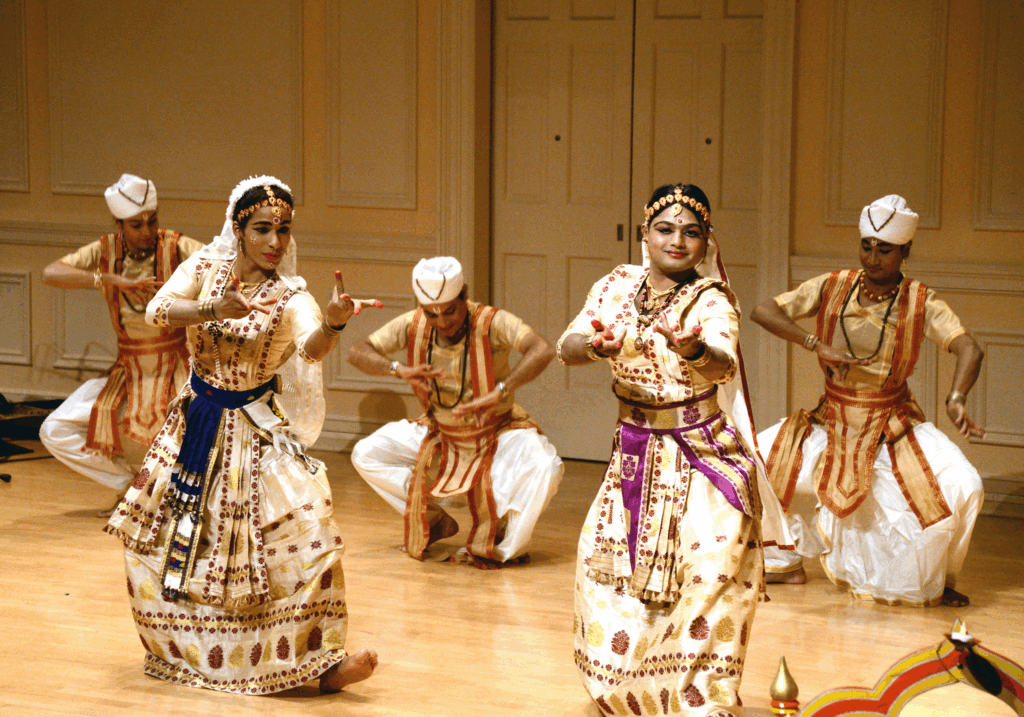
Image Credit: Library of Congress Blogs
Chhau (Odisha, Jharkhand, West Bengal)
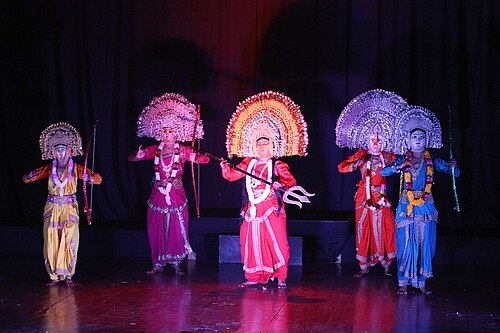
Image Credit: Wikipedia
Chhau is a semi-classical dance form that incorporates martial arts, acrobatics, and storytelling. It is performed in the states of Odisha, Jharkhand, and West Bengal. Dancers wear elaborate masks and colorful costumes, depicting various characters from epics and folklore. The dance is known for its vigorous movements and dramatic expression.
University Statement on Diversity and Non-Discrimination
Proudly powered by WordPress